Evidence Guide · Updated April 2026 · 8 min read
What Causes Bad Breath — 12 Causes Ranked by Frequency
Bad breath (halitosis) affects approximately 25% of adults worldwide. The causes are well-documented — yet most "solutions" people try (mints, mouthwash, more brushing) don't match the actual cause. This guide ranks all 12 causes by how common they are, shows you how to identify yours by symptoms, and links each to the specific fix.

Disclosure: We may earn a commission when you purchase through our links, at no extra cost to you. Our recommendations are based on independent testing and research. Full disclosure.
The short answer
90% of bad breath is oral — tongue bacteria (#1, ~70%), poor hygiene, gum disease, tonsil stones, dry mouth. 10% is systemic — GERD, sinusitis, diabetes, liver/kidney disease. The single highest-leverage intervention: daily tongue scraping (75% VSC reduction) + oral probiotic with S. salivarius K12 (ProvaDent). Mints and alcohol mouthwashes only mask, don't fix.
- 👅 #1 cause: anaerobic bacteria on back of tongue (~70%)
- 🦷 Oral total: ~90% of cases
- 🧪 Best fix at source: ProvaDent with S. salivarius K12
- ❌ Don't: alcohol mouthwashes (dry mouth → worse long-term)
Fix bad breath at the bacterial source
Once you identify the cause, the fix is targeted. For the most common cause (tongue bacteria), ProvaDent delivers Streptococcus salivarius K12 — the probiotic strain with RCT evidence for reducing volatile sulfur compounds by up to 85% over 4 weeks. Our 60-day testing showed the fastest breath improvement of any product we evaluated.
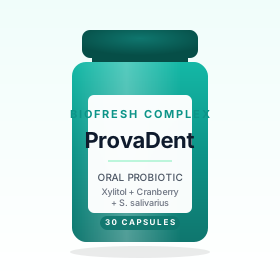
ProvaDent
ProvaDent
Pros
- Fast 2-week breath improvement
- S. salivarius K12 (strongest RCT evidence for halitosis)
- Xylitol + cranberry biofilm disruption
- 60-day money-back guarantee
- 92,000+ user reviews
Cons
- Official site only
- Newer product — less long-term data
- Mild initial adjustment week 1
The 12 causes ranked by frequency
Bad breath causes — clinical ranking
| Ingredient | Dose | Role | Evidence |
|---|---|---|---|
| 1. Tongue bacteria (anaerobic biofilm) | ~70% of cases | VSC-producing bacteria on back of tongue. Largest single source. | Primary |
| 2. Poor oral hygiene | Widespread | Inadequate brushing/flossing allows plaque maturation | Established |
| 3. Gum disease (gingivitis/periodontitis) | ~20-30% | Anaerobic bacteria thrive in gum pockets producing VSCs | Established |
| 4. Tonsil stones (tonsilloliths) | ~10% | Calcified debris in tonsillar crypts, highly odorous | Underdiagnosed |
| 5. Dry mouth (xerostomia) | ~20% | Reduced saliva allows bacterial overgrowth; medications major cause | Established |
| 6. GERD / acid reflux | ~5-8% | Stomach contents bring bacteria/odor up; acid damages tissue | Moderate |
| 7. Chronic sinusitis / post-nasal drip | ~5-8% | Mucus with bacteria drains to throat | Common |
| 8. Smoking / tobacco | Smokers | Direct odor + dry mouth + increased periodontitis risk | Established |
| 9. Medications | >400 drugs | Antihistamines, antidepressants, BP meds reduce saliva | Documented |
| 10. Dietary (garlic, coffee) | Transient | Compounds exhaled via lungs 24-48h | Obvious |
| 11. Uncontrolled diabetes | ~2-3% | Fruity/acetone breath during DKA; increased oral infections | Specific pattern |
| 12. Liver/kidney disease (rare) | <1% | Specific odors — fishy (uremia), musty (liver). Serious signs. | Medical emergency if present |
Percentages exceed 100% because many have multiple contributing causes. Sources: AAP, ADA, Cleveland Clinic.
Symptom-based diagnosis — find your cause
🕐 Mostly in the morning
Overnight saliva reduction + bacterial overgrowth. Normal, easy fix. Tongue scraping + water + oral probiotic.
🦷 Persists after brushing
Tongue bacteria or tonsil stones. Start daily tongue scraping. Check back of throat.
🩸 With bleeding gums
Gingivitis. See bleeding gums protocol. Breath resolves as gums heal.
😶 With dry mouth
Review medications (400+ cause xerostomia). See dry mouth guide.
🤢 Metallic / acidic taste
GERD. See physician for reflux evaluation. PPIs often resolve both.
🔴 White deposits in throat
Tonsil stones. See tonsil stones guide.
Root-cause fix protocol
- Week 1 baseline: daily tongue scraping + daily flossing/water flossing + 2-min brushing 2×/day
- Week 2 add: oral probiotic with S. salivarius K12 (ProvaDent or equivalent)
- Week 3-4 assess: meaningful improvement? Maintain. No improvement? → Step 4
- Dental evaluation: rule out gum disease, deep pockets, tonsil stones, cavities near gum line
- Physician evaluation: if persistent — GERD, sinus, diabetes screening
FAQ
What is the most common cause of bad breath?
Anaerobic bacteria on the back of the tongue cause approximately 70% of chronic bad breath cases. These bacteria produce volatile sulfur compounds (VSCs) — hydrogen sulfide, methyl mercaptan, dimethyl sulfide — as they metabolize food debris and dead cells. Tongue scraping reduces VSC levels by up to 75% in clinical studies — the single highest-impact intervention.
Can stomach problems cause bad breath?
Yes, but less common than people think. Only 5-10% of chronic halitosis has a GI origin. GERD (acid reflux bringing stomach contents up), H. pylori infection, and severe gastroparesis can cause it. The classic "stomach breath" is usually actually oral in origin (tongue bacteria, gum disease). If oral hygiene is excellent and bad breath persists, see a physician to rule out GERD — treatable with PPIs — and H. pylori (treatable with antibiotics).
Why does my breath smell like poop?
Fecal-smelling breath is a rare but serious symptom. Causes: (1) severe gum disease with anaerobic bacterial overgrowth, (2) chronic sinusitis with post-nasal drip of infected mucus, (3) intestinal obstruction (medical emergency — see ER immediately), (4) severe GERD, (5) certain medications. If the smell is persistent and strong, see a physician within 24-48 hours to rule out serious GI conditions.
Can bad teeth cause bad breath?
Yes. Cavities, abscesses, and failing dental work create bacterial reservoirs. Decayed tooth material, food trapped in cavities, and pus from infections all produce foul odors. Any dental work older than 10 years may have micro-leaks allowing bacterial colonization. A comprehensive dental exam with X-rays identifies hidden problems. Fixing cavities often dramatically improves breath.
Does dry mouth cause bad breath?
Yes, significantly. Saliva is your mouth's primary natural antibacterial and breath-neutralizing agent. Reduced saliva (xerostomia) allows VSC-producing bacteria to thrive. Common causes: medications (over 400 list dry mouth as side effect), sleep apnea / mouth breathing, Sjögren's syndrome, dehydration, certain cancer treatments. Addressing dry mouth often dramatically improves breath quality.
What foods cause bad breath?
Transient culprits (24-48h odor): garlic, onions, curry, coffee, alcohol, fish. These are absorbed and exhaled via lungs. Chronic contributors: high-sugar diets (feed cariogenic bacteria), low-fiber processed foods (reduce saliva stimulation), dairy (some people), sticky foods that trap in teeth. Keto diets produce "keto breath" (acetone smell) during ketosis — normalizes with metabolic adaptation.
Fix the bacterial source of bad breath
ProvaDent's S. salivarius K12 has the strongest RCT evidence for reducing VSCs. 60-day money-back guarantee.
Check ProvaDent pricing →