Buyer's Guide · Updated April 2026 · 9 min read
Best Water Flosser (2026) — Tested & Ranked by Clinical Evidence
Water flossers reduce gingival bleeding 50-93% more than string floss in published studies. But with 40+ models on Amazon and prices from $35-$250, choosing is confusing. We ranked the 6 best by pressure performance, ADA acceptance, tank capacity, and real-world durability — across countertop, cordless, and 2-in-1 designs.

Disclosure: We may earn a commission when you purchase through our links, at no extra cost to you. Our recommendations are based on independent testing and research. Full disclosure.
Top picks at a glance
- 🏆 Best overall: Waterpik Aquarius WP-660 — the clinical reference device
- 🎒 Best cordless: Waterpik Cordless Advanced — travel + small bathrooms
- 💎 Best premium cordless: Waterpik Ion — USB-C, slim, global voltage
- 🔄 Best 2-in-1: Waterpik Sonic-Fusion 2.0 — brush + floss combo
- 💰 Best budget: H2ofloss HF-9 — countertop at $50
The 6 best water flossers
Best Overall · ⭐ 4.7/5
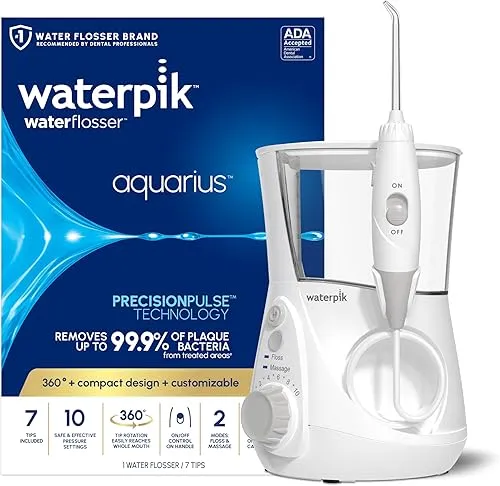
Waterpik Aquarius WP-660
Type: Countertop · Price: $79.99
The clinically validated gold standard. 10 pressure settings, 90-second tank, 7 tips included. Every major dental study uses Waterpik Aquarius as the reference device. ADA-accepted.
Check Amazon price →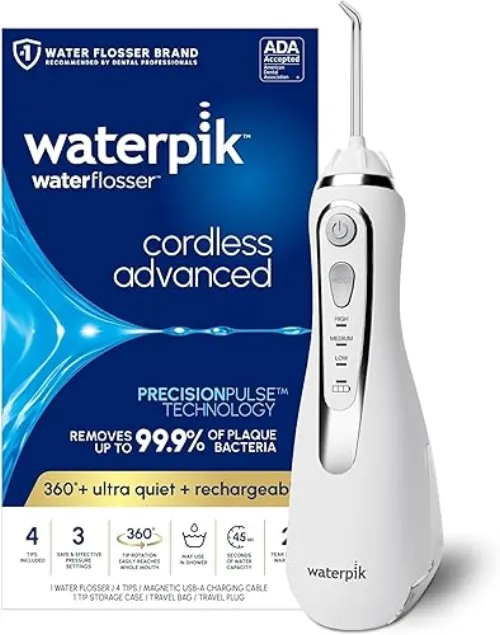
Best Cordless · ⭐ 4.6/5
Waterpik Cordless Advanced
Type: Cordless · Price: $69.99
Best portable option. 3 pressure modes, rechargeable lithium battery (4-week charge), 360° rotating tip. Same ADA-accepted mechanism as countertop in travel form.
Check Amazon price →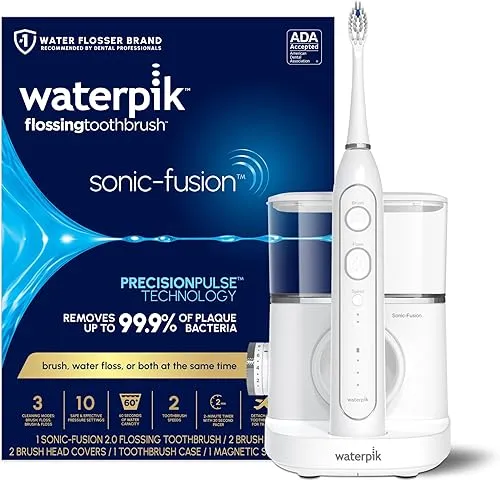
Best 2-in-1 · ⭐ 4.5/5
Waterpik Sonic-Fusion 2.0
Type: Brush + Flosser Combo · Price: $189.99
Electric toothbrush + water flosser in one device. Brush and floss simultaneously. Best space-saver for small bathrooms. Premium price justified by dual function.
Check Amazon price →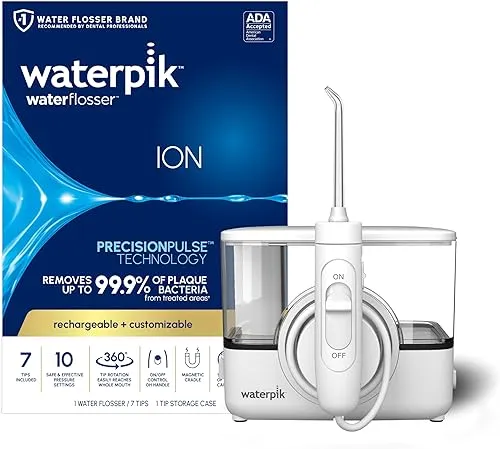
Best Premium Cordless · ⭐ 4.5/5
Waterpik Ion Cordless
Type: Cordless Premium · Price: $99.99
3 pressure modes, 30-sec timer, magnetic USB-C charger, 4x battery life vs older cordless. Slim profile, global voltage for international travel.
Check Amazon price →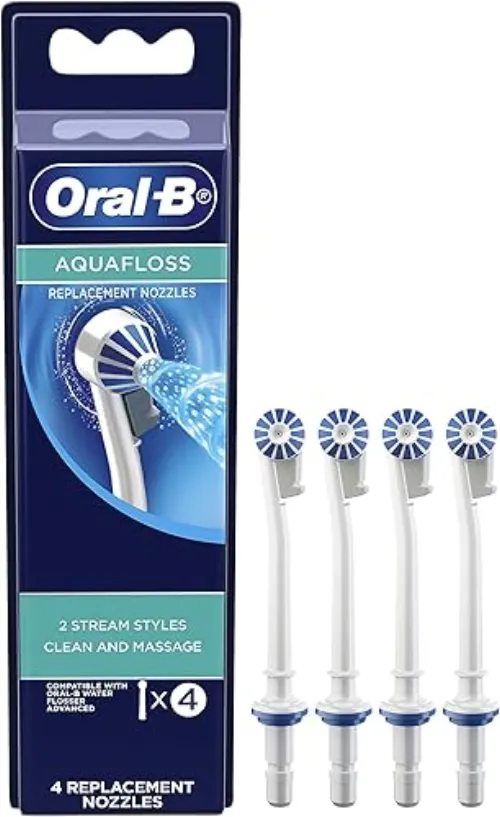
Best Oral-B Alternative · ⭐ 4.4/5
Oral-B Water Flosser Advanced
Type: Countertop · Price: $79.95
Oxyjet technology mixes air+water microbubbles. Good option if you already use Oral-B brush heads. 5 pressure settings, 600ml tank.
Check Amazon price →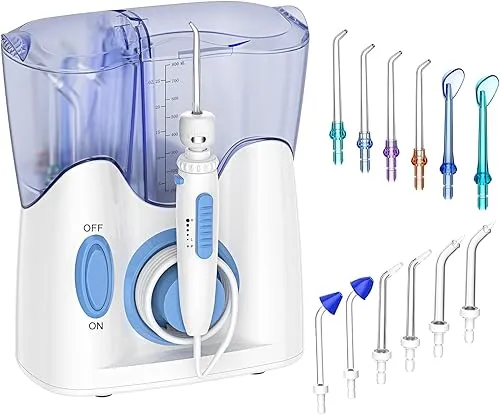
Best Budget · ⭐ 4.3/5
H2ofloss HF-9
Type: Countertop Budget · Price: $49.99
Solid countertop at half the Waterpik price. 10 pressure settings, 800ml tank (larger than Aquarius), 12 tips. No ADA acceptance but strong real-world performance.
Check Amazon price →Countertop vs cordless: which to buy
🏠 Choose countertop if you...
- Have gum disease or periodontal pockets (needs higher pressure)
- Use it as your primary daily flosser at home
- Want full 90-second reservoir (no refilling)
- Need 10 pressure settings for fine-tuning
- Have bathroom counter space
- Budget: $60-$90
🎒 Choose cordless if you...
- Travel frequently (TSA-compliant)
- Share a small bathroom (no counter footprint)
- Prefer cordless bathroom setup aesthetic
- Have standard gum health (moderate pressure sufficient)
- Want magnetic USB-C charging (Ion model)
- Budget: $70-$100
Why pressure settings matter
Water flosser pressure settings explained
| Ingredient | Dose | Role | Evidence |
|---|---|---|---|
| Setting 1-3 (Low: 10-40 PSI) | First 2 weeks of use | Gum adaptation period. Use if gums bleed easily or with Pik Pocket tip along gumline. | ✅ Gum disease / new users |
| Setting 4-6 (Medium: 40-70 PSI) | Most healthy users daily | Sweet spot for plaque removal without discomfort. Default recommendation. | ✅ Daily maintenance |
| Setting 7-10 (High: 70-100 PSI) | Heavy plaque, braces, implants | Maximum cleaning force. Required for orthodontic appliances and reaching deep pockets. | ✅ Orthodontics / implants |
| Pulse-Modulation (Waterpik) | 1,400 pulses/min | Provides micro-interruptions that enhance plaque disruption and gum massage | ✅ Proprietary Waterpik feature |
| Oxyjet (Oral-B) | Air+water microbubbles | Distinct mechanism — infuses micro-air bubbles into water stream for different feel | ⚠️ Alternative mechanism |
| Fixed pressure (budget models) | No adjustment | Avoid — cannot adjust for gum adaptation or pocket depth | ❌ AVOID |
Which tip for which job
Classic Jet Tip (daily use)
For: general plaque removal, gum massage, healthy mouth. Comes with every Waterpik. Use 80% of the time.
Pik Pocket Tip (gum disease)
For: periodontal pockets 3-6mm. Soft rubber tip angled along gumline. Use at low pressure (1-3). Gum disease patients use this 2x daily.
Orthodontic Tip (braces)
For: cleaning around brackets, wires, clear aligners. Integrated brush bristles + water jet. Removes 3× more plaque from braces than string floss.
Plaque Seeker Tip (implants/bridges)
For: dental implants, crowns, bridges, veneers. 3-tufted bristle design. Essential for implant maintenance to prevent peri-implantitis.
Match the water flosser to your situation
Gum disease / bleeding gums
Best: Waterpik Aquarius + Pik Pocket tips. Countertop pressure range is critical for periodontal pockets. Start at setting 2 and progress over 2 weeks.
Braces or clear aligners
Best: Waterpik Aquarius with Orthodontic tip. Published Waterpik-vs-string-floss study in orthodontic patients: 3× more plaque removal.
Dental implants or bridges
Best: Waterpik Aquarius + Plaque Seeker tip. Non-negotiable for implant longevity — prevents peri-implantitis (the #1 cause of implant failure).
Frequent traveler
Best: Waterpik Ion (USB-C, global voltage) or Cordless Advanced. Ion's slim profile fits airline toiletry bags.
5 common water flosser mistakes to avoid
- Starting on highest pressure: causes bleeding, discomfort, and tissue irritation. Always start at setting 1-3 for 1-2 weeks.
- Flossing after brushing with fluoride: rinses fluoride away. Water floss BEFORE brushing (or wait 30 min).
- Keeping lips closed: water needs to flow out. Lean over sink and let lips stay partially open.
- Skipping the Pik Pocket tip for gum disease: the jet tip is not designed for pockets. Use Pik Pocket at low pressure.
- Not replacing tips every 3-6 months: bristles and nozzles degrade. Tip quality affects plaque removal significantly.
FAQ
What is the best water flosser in 2026?
The Waterpik Aquarius WP-660 is the evidence-based overall winner — it is the device used as the reference in most published water flosser studies and is ADA-accepted. 10 pressure settings, 90-second reservoir, 7 specialty tips included. For cordless/travel, the Waterpik Cordless Advanced matches the performance in portable form.
Is a water flosser as good as flossing?
Water flossers are equivalent or better than string floss for reducing gingival bleeding — Cochrane evidence and ADA acceptance confirm this. They remove 99.9% of plaque from treated areas. String floss is better for tight interproximal contacts; water floss is superior for braces, implants, bridges, gum disease, and anyone who does not floss consistently. Most dentists now recommend both.
Waterpik vs Oral-B: which water flosser is better?
Waterpik has 30+ years of clinical research, ADA acceptance, and 10-pressure granularity. Oral-B Oxyjet uses air+water microbubbles (distinct mechanism) with fewer pressure options. For most users, Waterpik Aquarius is the better pick. Oral-B is a reasonable choice for brand loyalty or if combining with an Oral-B brush system.
Countertop or cordless water flosser?
Countertop (Waterpik Aquarius): more pressure settings, larger reservoir (90 sec), higher maximum pressure. Best for home use and gum disease. Cordless (Cordless Advanced, Ion): portable, no cord clutter, travel-friendly. Smaller reservoir (45 sec), slightly less maximum pressure. Pick countertop for daily primary use, cordless if bathroom space is tight or you travel frequently.
Do water flossers work for gum disease?
Yes — this is where water flossers outperform string floss. Published research shows Waterpik reduces gingival bleeding 50-93% more than string floss in patients with gingivitis. Use the Pik Pocket tip at low pressure along the gumline. For periodontitis patients, water floss reaches 3-6mm into pockets that string floss cannot access.
Can water flossers damage gums?
Not at appropriate pressure. Start on the lowest setting (setting 1-3) for 1 week to let gums adapt. Increase gradually. Bleeding in the first 1-2 weeks is from existing inflammation, not damage. Pressure too high can cause temporary tissue irritation. If bleeding persists past 2 weeks despite low pressure, see a dentist — this indicates active gum disease needing professional care.
How often should I use a water flosser?
Daily — ideally once per day, most effective before brushing (so fluoride from toothpaste isn’t rinsed away). Full mouth takes 1-2 minutes. Consistency matters more than duration. For gum disease patients: twice daily during active treatment.
Full individual reviews
Want deeper detail on the top picks? Read our full 60-90 day testing reviews:
- Waterpik Aquarius review — the clinical gold standard, ADA-accepted, 90-day test
- Waterpik Cordless Advanced review — best portable option, 60-day test
Start with the clinical gold standard
The Waterpik Aquarius is the device cited in Cochrane research and accepted by the ADA. 10 pressure settings cover every gum condition.
Check Waterpik Aquarius on Amazon →