Buyer's Guide · Updated April 2026 · 10 min read
Best Fluoride-Free Toothpaste (2026) — 8 Evidence-Based Picks
Searches for "fluoride-free toothpaste" have doubled in the US in the last year — from 27,000 to over 135,000 monthly searches. The category has matured: nano-hydroxyapatite (n-HAp) formulations now offer clinically validated cavity prevention without fluoride. We ranked the 8 best fluoride-free toothpastes by clinical evidence, ingredient quality, and real-world testing.

Disclosure: We may earn a commission when you purchase through our links, at no extra cost to you. Our recommendations are based on independent testing and research. Full disclosure.
Top picks at a glance
- 🏆 Best overall: Boka Ela Mint — 10% nano-hydroxyapatite, dentist-developed
- 🔬 Most clinical research: Apagard Premio — 40+ years of Japanese studies
- 💰 Best value n-HAp: David's Nano Hydroxyapatite — $10
- 🌿 Best natural: Tom's of Maine Antiplaque
- 👶 Best for families: RiseWell Mineral
- 💊 Best CB supplement pairing: PowerBite (mineral support overnight)
The 8 best fluoride-free toothpastes ranked
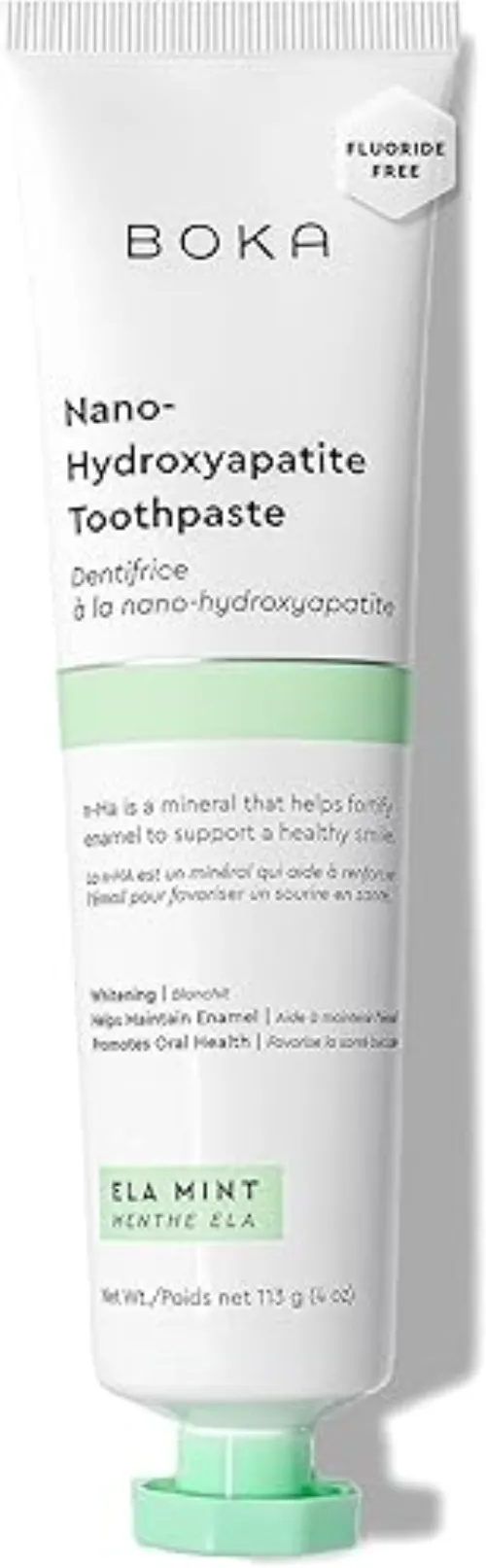
Best Overall · ⭐ 4.6/5
Boka Ela Mint
Active: 10% Nano-hydroxyapatite + xylitol · Price: $14.99
The most clinically validated fluoride-free option. n-HAp biomimetically remineralizes enamel. Japanese research shows non-inferior to fluoride for cavity prevention. Dentist-developed.
Check Amazon price →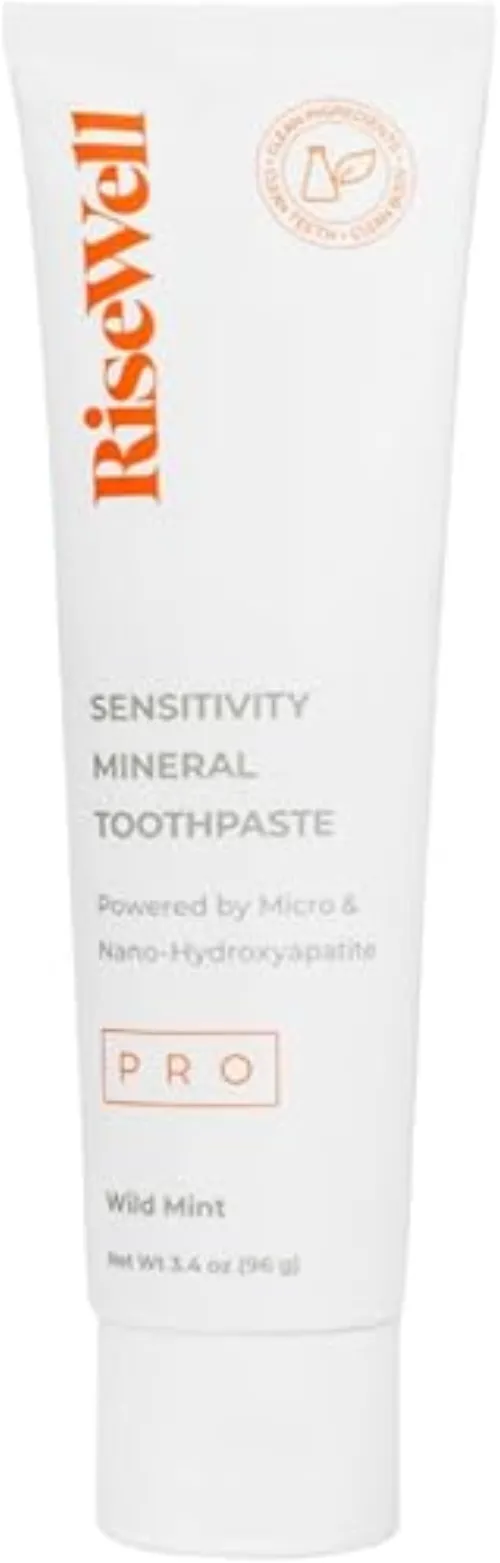
Best n-HAp Paste · ⭐ 4.5/5
RiseWell Mineral Toothpaste
Active: Nano-hydroxyapatite + erythritol + xylitol · Price: $12.00
Clean formulation developed with pediatric dentists. Good mint flavor without SLS. Works for the whole family. Toothpaste tablets also available.
Check Amazon price →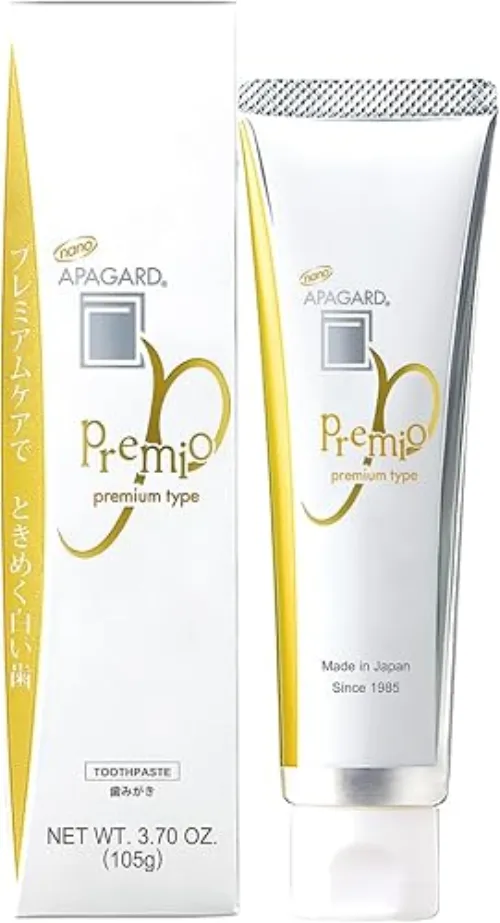
Most Clinical Research · ⭐ 4.6/5
Apagard Premio
Active: Medical nano-hydroxyapatite (mHAP) · Price: $22.99
40+ years of clinical use in Japan. Gold standard for n-HAp research. Imported premium — higher price but most studied fluoride-free paste globally.
Check Amazon price →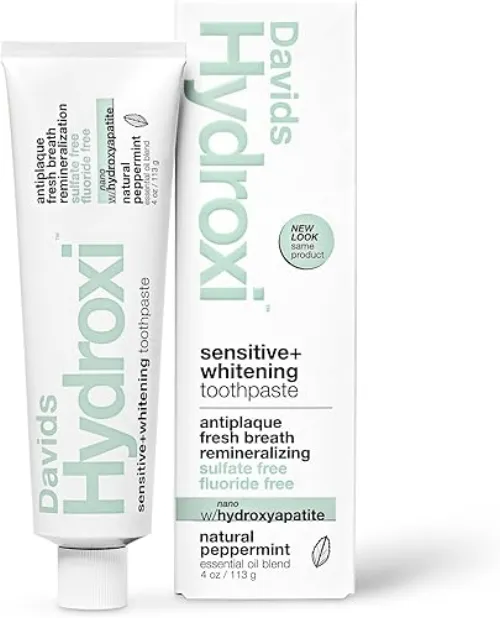
Best Value n-HAp · ⭐ 4.4/5
David's Nano Hydroxyapatite
Active: Nano-hydroxyapatite + natural mint oil · Price: $9.95
Aluminum tube (recyclable), metal key. US-made. $10 is cheapest clinically valid n-HAp toothpaste available. Transparent ingredient list.
Check Amazon price →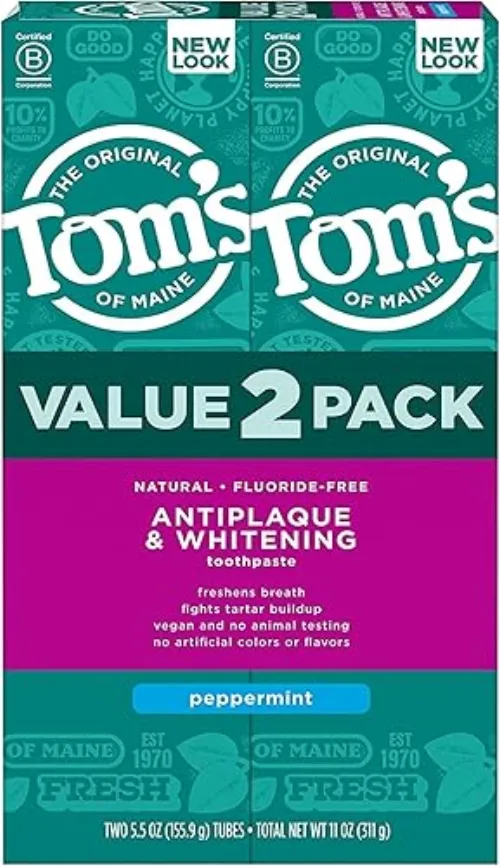
Best Natural Pick · ⭐ 4.5/5
Tom's of Maine Fluoride-Free Antiplaque
Active: Zinc citrate + propolis + myrrh · Price: $6.49
Natural formulation focused on plaque control rather than mineralization. Good for users who want zero lab-synthesized ingredients. Available in major drugstores.
Check Amazon price →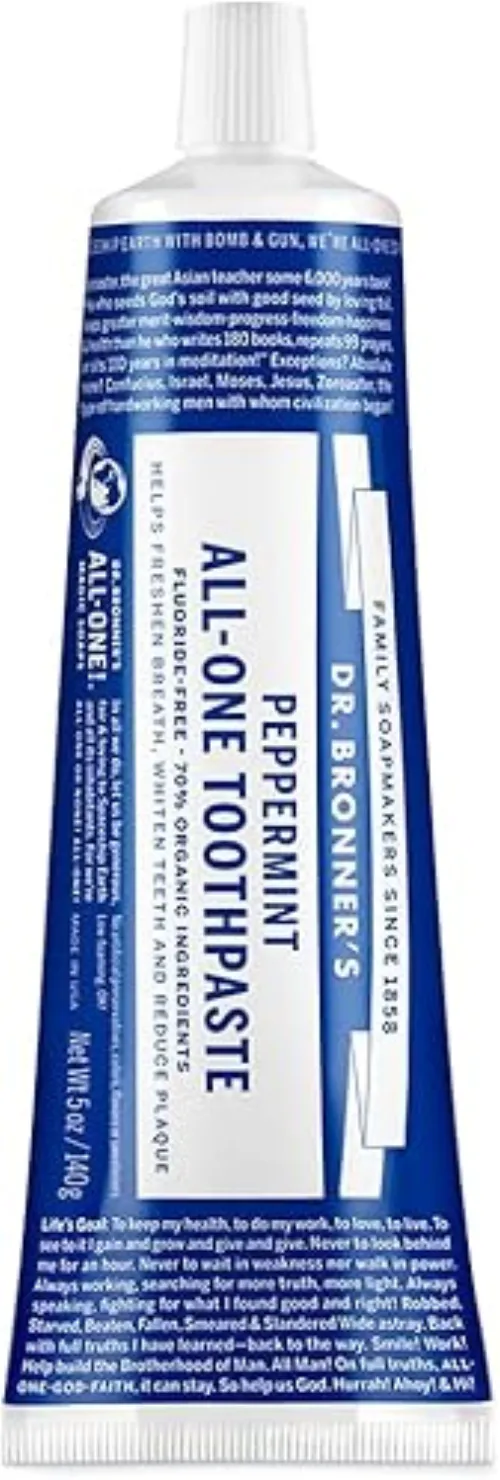
Best Minimalist · ⭐ 4.3/5
Dr. Bronner's All-One Toothpaste
Active: Fair-trade coconut oil + organic peppermint · Price: $5.49
Simplest ingredient list on the market. No foaming agents, no sweeteners. Good for users with mouth sensitivities to SLS or artificial additives.
Check Amazon price →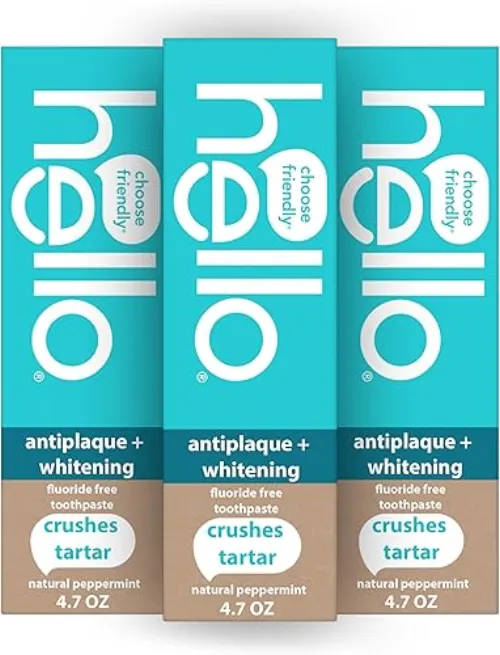
Best Budget · ⭐ 4.4/5
Hello Naturally Whitening Fluoride-Free
Active: Calcium carbonate + xylitol + coconut oil · Price: $4.99
Entry-level fluoride-free option at drugstore pricing. Gentle whitening. Widely available at Target, Walmart, Amazon. Good for testing if fluoride-free works for you.
Check Amazon price →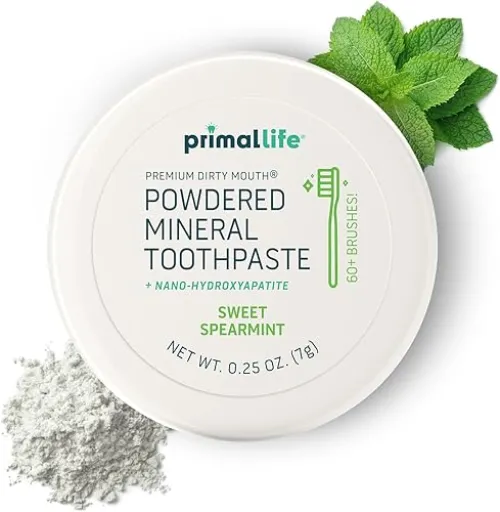
Best Powder Format · ⭐ 4.3/5
Primal Life Organics Dirty Mouth Toothpowder
Active: Bentonite clay + kaolin + essential oils · Price: $27.95
Traditional tooth powder format. Controversial but has strong loyal user base. Focus on mechanical cleaning + mineral provision rather than nerve desensitization.
Check Amazon price →Why nano-hydroxyapatite works
Hydroxyapatite (HAp) is the primary mineral your teeth are naturally made of — roughly 97% of enamel and 70% of dentin. When you consume acidic foods or acid-producing bacteria, this mineral dissolves out (demineralization). Your saliva can replace it if given time and mineral support — this is remineralization.
Nano-sized hydroxyapatite (n-HAp) in toothpaste delivers this exact mineral in particles small enough to fit into demineralized areas and dentin tubules. The body recognizes it as native material and integrates it directly into enamel — unlike fluoride, which converts the enamel mineral into fluorapatite (harder but structurally different).
Evidence summary
- Japan: 40+ years of clinical use with Apagard. Non-inferior to fluoride in multiple published trials.
- Europe: Growing dental community adoption. German and Italian clinical trials support efficacy.
- US: FDA has not classified n-HAp as anti-caries drug yet — marketed as remineralizing cosmetic. Growing pediatric dentist adoption.
- Systematic reviews (2019-2023): Multiple meta-analyses conclude n-HAp is non-inferior to fluoride for enamel remineralization and caries prevention.
Active ingredients compared
Fluoride-free toothpaste actives
| Ingredient | Dose | Role | Evidence |
|---|---|---|---|
| Nano-hydroxyapatite (n-HAp) | 5-10% (Boka, Apagard, David's) | Biomimetic remineralization — same mineral as enamel | ✅ STRONG — 40+ years Japan data |
| Medical-grade HAp (mHAP) | Apagard signature form | Highest-purity hydroxyapatite. Premium clinical standard. | ✅ STRONGEST (Apagard) |
| Calcium carbonate | 15-40% (natural pastes) | Mild abrasive + mineral substrate. Not biomimetic like n-HAp. | ⚠️ MODERATE — mechanical only |
| Xylitol | 5-15% (many fluoride-free) | Inhibits S. mutans (cavity bacteria). Synergistic with n-HAp. | ✅ Strong — Cochrane supports |
| Zinc citrate | Tom's of Maine, some natural | Antibacterial + anti-plaque + breath improvement | ✅ Moderate — plaque reduction |
| Coconut oil / MCT | Primal, Dr. Bronner's | Traditional antibacterial (lauric acid). Limited cavity prevention data. | ⚠️ WEAK — anecdotal |
| Essential oils (myrrh, tea tree, propolis) | Tom's of Maine, natural brands | Antibacterial, anti-inflammatory | ⚠️ MODERATE — gum health data |
| Bentonite clay | Primal Dirty Mouth | Absorbs toxins, mineral source. Traditional approach. | ❌ WEAK — no clinical trials |
Who should switch to fluoride-free
✅ Good candidates for fluoride-free
- Adults with good oral hygiene and low caries risk
- Children under 3 (swallow toothpaste)
- Pregnant/nursing women (preference for minimal additives)
- Users with history of dental fluorosis
- Well-water users with high natural fluoride
- Patients with medication-induced fluoride sensitivity
- Users who value biomimetic ingredients
⚠️ Stick with fluoride if you have
- High cavity risk (multiple cavities in last 2 years)
- Severe gum recession exposing root surfaces
- Dry mouth from medication
- Active orthodontic treatment (braces)
- Recent dental work or fillings
- Age 65+ with age-related caries risk
- Diabetes or other conditions increasing caries risk
Complete remineralization stack
For users transitioning away from fluoride who want comprehensive enamel support, pair your n-HAp toothpaste with overnight mineral supplementation:
PowerBite
Nightly dissolvable candy combining calcium carbonate (mineral substrate), xylitol (cavity bacteria inhibitor), myrrh, and clove. Delivers mineral support during the overnight low-saliva window. Synergistic with n-HAp toothpaste for users seeking a complete fluoride-free remineralization protocol.
Cost: $69 · Guarantee: 60-day money back
Check PowerBite Official Site →How to maximize fluoride-free protection
- Brush twice daily with n-HAp toothpaste (Boka, RiseWell, Apagard, David\'s). Pea-sized amount.
- Spit, don\'t rinse — let n-HAp stay in contact with enamel for 30+ minutes.
- Add xylitol gum or mints 3-5 times daily (6-10g xylitol total). Starves cavity bacteria.
- Use ACT fluoride rinse at night IF your dentist recommends it for high caries risk (some users add fluoride at night while using n-HAp toothpaste).
- Reduce sugar frequency — it\'s not total sugar but FREQUENCY of exposure that drives cavities. Eat sweets with meals, not as snacks.
- Stay hydrated — saliva is nature\'s mineral delivery system. Dehydration dramatically increases caries risk.
- 6-month dental checkups — non-negotiable for fluoride-free users. Professional fluoride treatment at checkups is optional but worth discussing.
- Monitor for white spot lesions — the earliest sign of demineralization. Reversible with n-HAp + xylitol + PowerBite in 3-6 months.
Frequently asked questions
Is fluoride-free toothpaste safe?
Yes — fluoride-free toothpastes with nano-hydroxyapatite (n-HAp) are clinically validated for cavity prevention and enamel remineralization. Published research, particularly from Japan where n-HAp has been used for 40+ years, shows non-inferiority to fluoride. The ADA has not yet accepted any n-HAp product formally, but evidence strongly supports efficacy. For adults and children over 6, fluoride-free options work well. For high-caries-risk patients, fluoride remains the most evidence-backed choice.
Does fluoride-free toothpaste prevent cavities?
Yes — when formulated with nano-hydroxyapatite. n-HAp biomimetically fills dentin tubules and remineralizes enamel with the same mineral (calcium phosphate) your teeth are naturally made of. Brands like Boka, RiseWell, Apagard, and David's have n-HAp concentrations (5-10%) that clinical studies show effectively prevent cavities. Tooth powders and calcium-carbonate-only pastes are less clinically validated.
Nano-hydroxyapatite vs fluoride: which is better?
Fluoride has more decades of clinical data (80+ years). Nano-hydroxyapatite has growing evidence (40+ years in Japan, newer in US). Both work for cavity prevention. n-HAp advantages: biomimetic (same mineral as tooth), no toxicity risk if swallowed, works for all ages including toddlers, may be better for sensitivity. Fluoride advantages: ADA-backed, widest research base, cheapest. Choose based on preference — both work.
Why are people switching to fluoride-free?
Several reasons drive the trend: (1) fluoride toxicity concerns at high doses (legitimate in children under 6 who swallow toothpaste), (2) preference for biomimetic ingredients, (3) concerns about fluorosis (white streaks on teeth from excess fluoride in childhood), (4) philosophy of natural/minimal formulations, (5) better alternatives now exist with strong clinical data (n-HAp). For most adults with good rinse habits, fluoride is safe. But fluoride-free options with n-HAp are now equally valid.
Which fluoride-free toothpaste has the most evidence?
Apagard (Japanese brand) has the longest clinical research history with medical-grade nano-hydroxyapatite (mHAP). Boka Ela Mint is the most research-backed US-available brand. Both contain 10% n-HAp and have published clinical studies on enamel remineralization. RiseWell and David's are also strong clinical options at lower prices.
Should kids use fluoride-free toothpaste?
For children under 3, pediatric dentists increasingly recommend fluoride-free n-HAp toothpaste because kids swallow most of their toothpaste. Post-age-3, rice-grain-sized fluoride toothpaste is fine if supervised. n-HAp toothpastes (Boka Kids, RiseWell Kids) are safe even if swallowed. Discuss with your pediatric dentist based on cavity risk.
Can I use fluoride-free toothpaste if I have cavities?
For early-stage, pre-cavitated decay (white spots), yes — n-HAp can remineralize and reverse these. For cavitated decay (actual holes), no toothpaste reverses them — you need a filling. After fillings, fluoride-free n-HAp toothpaste is fine to prevent future cavities. High-caries-risk patients should consult their dentist about whether to add prescription fluoride rinse alongside fluoride-free paste.
Start with the evidence-based winner
Boka Ela Mint delivers 10% n-HAp in a clinically validated formula. 4-6 weeks of twice-daily use is enough to evaluate.
Check Boka Ela Mint on Amazon →